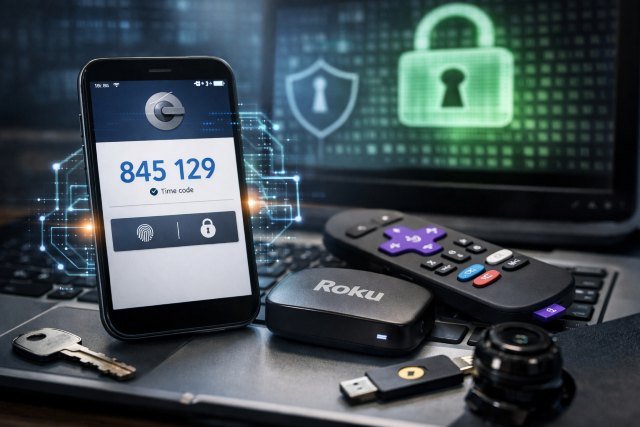
In a time when stolen passwords, phishing pages, and account takeovers are common, Twoku Authenticator is the kind of keyword many users search when they want a stronger way to protect their logins. Whether you are securing email, social media, cloud apps, or workplace tools, authenticator-based security adds an extra verification step that makes it much harder for attackers to break in. That matters because passwords alone are no longer enough, and security authorities consistently recommend multi-factor authentication as one of the most effective defenses available.
At its core, an authenticator solution works by requiring something beyond your password. That second step is often a time-based one-time password, sometimes called a TOTP code, which changes every 30 seconds or so and is generated on a trusted device. This model is widely used because it is more secure than relying on passwords alone, and in many cases it is stronger than basic email or SMS verification. The U.S. Federal Trade Commission says the more secure two-factor methods are an authenticator app or a security key, while NIST explains that multi-factor authentication improves identity assurance by requiring more than one factor.
What Twoku Authenticator Means in Practice
When people search for Twoku Authenticator, they are usually looking for a simple answer to a practical problem: how do I stop someone from logging into my account just because they guessed, reused, or stole my password? The answer is to add a second factor that an attacker is less likely to possess. In real-world security terms, that means your password is no longer the only gatekeeper.
This extra layer matters more than many users realize. Microsoft has reported that more than 99.9% of compromised accounts did not have MFA enabled, which is one of the clearest signals that extra verification dramatically reduces risk. OWASP also highlights MFA as a strong defense against common password attacks such as brute-force attempts, password spraying, and credential stuffing.
How an Authenticator App Protects Your Accounts
The biggest security improvement from a tool like Twoku Authenticator is that it changes the login equation. A criminal may obtain your password through a data breach, a fake login page, malware, or password reuse across sites. But if your account also requires a fresh one-time code from your phone or trusted device, that stolen password becomes much less useful on its own.
That is why authenticator apps are often recommended for email accounts, banking dashboards, business tools, developer platforms, and social networks. The time-sensitive code expires quickly, which narrows the attacker’s window. Unlike static passwords, the code is not reused from one session to the next. This design does not make you invincible, but it does raise the cost and difficulty of account takeover.
Another strength is reliability. TOTP-based authenticator apps generally work offline once set up, because the code is generated on the device rather than delivered through a mobile network. That can make them faster and more dependable than text-based codes when signal is weak or travel conditions are unpredictable. Swift’s security guidance, for example, recommends TOTP generated directly in an authenticator app and describes it as more secure, faster, and more reliable than telephony-based options.
Twoku Authenticator vs SMS Codes

A common question is whether Twoku Authenticator would be better than receiving a code by text message. In many situations, yes. SMS-based authentication is still better than password-only login, but it has weaknesses. Messages can be intercepted through SIM-swap fraud, social engineering, or telecom-related abuse. App-based authentication reduces some of those exposures because the code is created locally on your device rather than traveling over a carrier network.
That said, authenticator apps are not perfect. Traditional TOTP codes can still be phished if a user enters them into a convincing fake site in real time. This is why security guidance increasingly points to phishing-resistant methods such as passkeys and hardware-backed credentials for higher-risk scenarios. CISA’s guidance emphasizes phishing-resistant MFA, and Google explains that passkeys are resistant to phishing because they are bound to the site or app that created them.
Why Twoku Authenticator Still Matters in 2026
Even with the rise of passkeys, authenticator apps remain highly relevant. Many websites, business tools, and consumer platforms still support TOTP as their primary second-factor option. For everyday users, an authenticator app is often the easiest meaningful upgrade from weak password habits. It is familiar, widely supported, and much more protective than doing nothing beyond a password.
This makes Twoku Authenticator a useful concept for both personal and business security. If you manage several accounts, an authenticator workflow can help you separate routine logins from more sensitive ones. For example, you might use stronger phishing-resistant methods where available for your email and financial services, while still using authenticator codes for other platforms that do not yet support passkeys. That layered approach reflects modern best practice rather than an all-or-nothing mindset.
Real-World Example of Better Login Security
Imagine a freelancer who uses the same email account for client messages, invoices, design files, and cloud logins. If that password is leaked in a third-party breach, attackers could try it everywhere else. With Twoku Authenticator enabled as a second step, the attacker may know the password but still cannot complete the sign-in without the time-based code from the freelancer’s device.
Now imagine a small business team with shared exposure to phishing attempts. One employee clicks a fake login page and types a password. Without MFA, that may be enough for a breach. With an authenticator-based second factor, the attacker still faces another barrier, and the organization has a better chance of stopping the intrusion before it turns into mailbox compromise, payment fraud, or internal data theft. This is exactly why MFA is recommended so broadly by agencies and security frameworks.
How to Use Twoku Authenticator the Smart Way
To get the most value from Twoku Authenticator, the setup process matters as much as the app itself. The first rule is to enable it first on your primary email account, because email is often the recovery path for your other services. If someone controls your inbox, they may reset passwords elsewhere. Protecting that account creates a much stronger foundation for everything connected to it.
The second rule is to store backup or recovery codes safely. Authenticator protection is powerful, but users can lock themselves out if they lose a phone, wipe a device, or restore it incorrectly. A secure offline backup, password manager note, or protected recovery workflow prevents security from turning into a self-inflicted access problem. NIST’s authenticator guidance also stresses lifecycle issues such as binding, recovery, and revocation, which are often overlooked by casual users.
The third rule is to stay alert to phishing. A one-time code is helpful, but it does not automatically stop every fake login trick. If a website looks suspicious, has an unusual URL, or pressures you into urgent action, pause before entering any code. For high-value accounts, choose passkeys or security keys wherever available, because those methods are designed to resist phishing in a way ordinary TOTP codes are not.
Twoku Authenticator and Passkeys: Competitors or Complements?
This is where many modern security articles miss the nuance. It is not really Twoku Authenticator versus passkeys in a strict winner-takes-all sense. In practice, authenticator apps are often the best widely available upgrade, while passkeys are the stronger long-term direction for many services. Google and the FIDO Alliance describe passkeys as phishing-resistant and built on cryptographic key pairs, making them harder to steal or reuse than passwords and ordinary codes.
So the right strategy is usually progressive. Start with an authenticator method anywhere it is supported and you have not enabled MFA yet. Then upgrade your highest-risk accounts to passkeys or hardware security keys when those options are available. That approach improves security immediately without waiting for every platform to catch up.
Common Questions About Twoku Authenticator
Is Twoku Authenticator the same as two-factor authentication?
Not exactly. Twoku Authenticator would refer to the tool or app experience, while two-factor authentication is the security process itself. The app helps generate or approve the second factor, but the broader concept is 2FA or MFA. NIST defines MFA as requiring more than one factor to verify identity.
Does Twoku Authenticator make accounts completely hack-proof?
No security tool can promise that. An authenticator app greatly lowers the risk of password-based compromise, but users can still be targeted by phishing, malware, device theft, or poor recovery practices. It is a major upgrade, not a magic shield. That is why CISA and Google also emphasize phishing-resistant methods for stronger protection.
Is an authenticator app better than SMS verification?
In general, yes. The FTC says authenticator apps and security keys are more secure forms of two-factor authentication than common text or email code methods. App-generated codes reduce some of the weaknesses tied to telecom delivery.
Should I still use strong passwords if I enable Twoku Authenticator?
Absolutely. MFA strengthens a password; it does not replace good password hygiene everywhere. Use a unique password for every important account, store it in a trusted password manager, and combine that with authenticator-based security for the best everyday protection. OWASP and major security vendors consistently frame MFA as an additional layer, not a replacement for sane password practice.
Final Thoughts on Twoku Authenticator
Twoku Authenticator represents an important idea in modern cybersecurity: your password should not be your only line of defense. Authenticator-based login protection helps reduce the damage caused by breached passwords, reused credentials, and common account takeover attacks. It is easy to understand, practical for everyday users, and strongly aligned with mainstream security guidance from organizations such as NIST, FTC, Microsoft, and CISA.
The smartest takeaway is simple. If an account matters to you, protect it with more than a password. Use Twoku Authenticator as the keyword focus of your article, but in real-world security terms, prioritize an authenticator app today and move toward passkeys or phishing-resistant MFA where possible. That combination gives you stronger, more resilient online account security in a threat landscape where password-only login is no longer enough.