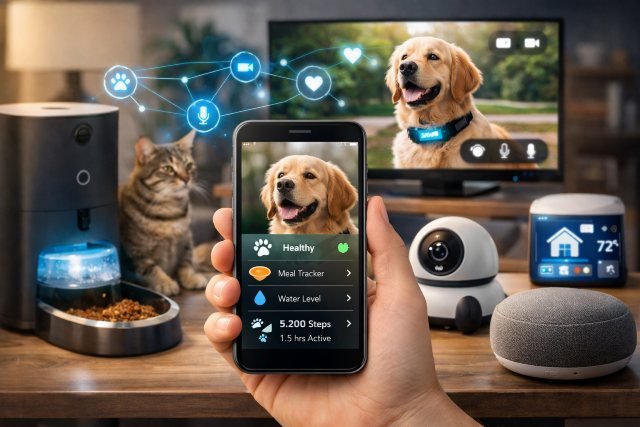
Woofapps represents the kind of connected pet care platform many modern pet owners and pet service providers are looking for: one place to manage health records, reminders, appointments, communication, and everyday routines. Even though the name “Woofapps” appears online in more than one context, the broader idea behind it fits a fast-growing shift in pet care, where digital tools are helping owners stay more organized and helping pet businesses deliver better, more responsive service. That trend is supported by a strong and expanding pet economy. In the United States alone, pet industry expenditures reached $158 billion in 2025, with growth projected to continue in 2026.
Pet care has changed dramatically over the last few years. It is no longer just about feeding, grooming, and routine vet visits. Today, owners want alerts, mobile access, wearable tracking, digital records, and easier coordination with vets, trainers, groomers, and sitters. Veterinary organizations have also recognized the growing role of telehealth, remote monitoring, and connected care in supporting stronger outcomes for pets and more efficient workflows for practices.
That is why a concept like Woofapps matters. It reflects where pet care is heading: less fragmented, more data-driven, and much easier for owners to manage in real life. Instead of juggling paper vaccination cards, text message reminders, separate booking systems, and scattered health notes, a smart pet care platform can bring everything together in one digital ecosystem. If built well, it does not replace human care. It supports it.
What Is Woofapps?
Woofapps can be understood as a smart pet care technology platform designed to simplify pet ownership and improve service coordination. Online descriptions of Woofapps commonly position it as a digital hub for pet parents and pet-related businesses, with features such as appointment management, pet profiles, reminders, care records, and service communication.
In practical terms, that means an owner could use Woofapps to store vaccination dates, set medication reminders, book grooming sessions, keep feeding notes, upload lab reports, and track behavior or activity changes. A pet business, on the other hand, could use a platform like this to organize schedules, reduce missed appointments, centralize customer information, and communicate more clearly with clients. That dual value is one reason smart pet platforms are becoming more attractive across the industry.
The appeal is simple. Pet care is emotional, personal, and often time-sensitive. When technology reduces friction, pet owners feel more in control and businesses can respond more consistently.
Why Smart Pet Care Technology Is Growing So Fast
The growth of smart pet care technology is not happening in isolation. It is being fueled by bigger shifts in consumer behavior, veterinary care, and the overall pet economy. APPA reports that U.S. pet industry spending hit $158 billion in 2025 and is projected to reach $165 billion in 2026, which shows how much owners are willing to invest in their animals’ health, comfort, and wellbeing.
At the same time, connected devices and data-based monitoring are becoming more mainstream. Multiple market trackers now estimate that the pet wearable segment is worth billions of dollars globally and is projected to keep expanding strongly through the next decade, driven by real-time monitoring, GPS features, and health sensing. While forecasts differ by methodology, they agree on the direction: pet wearables and smart monitoring tools are a growth category, not a niche experiment anymore.
This matters for Woofapps because software becomes more powerful when it is connected to real data. A reminder app is useful. A platform that can combine reminders with activity trends, appointment history, medication schedules, and remote updates from a wearable device becomes far more valuable. That is where smart pet care starts to feel less like a convenience and more like a modern care system.
How Woofapps Fits the Modern Pet Owner’s Life
Most pet owners do not need more apps. They need fewer disconnected tools. That is exactly why a centralized platform stands out. When a pet parent has one dog, one cat, or even multiple pets with different routines, it becomes surprisingly difficult to remember every vaccine date, grooming interval, flea treatment, dietary adjustment, and behavior note.
Woofapps fits that reality by acting like a digital control center. Instead of searching old emails for a grooming booking or trying to remember the last medication dose, an owner can check one place. That convenience may sound small, but in everyday life it can make pet care more consistent. Consistency is often what separates reactive pet ownership from proactive pet care.
There is also a trust factor. Owners want visibility. They want to know when their pet last ate, when the next checkup is due, what symptoms were observed last week, and whether a trainer or groomer left any notes. A well-designed platform turns that scattered information into an organized timeline. That helps owners ask better questions and notice patterns sooner.
Core Features That Make Woofapps Useful
A strong smart pet care platform is usually built around a few high-value features. One of the most important is the pet profile. This profile can include breed, age, weight, allergies, medications, vaccination records, microchip details, and emergency contact information. When that data is easy to access, it becomes more useful during travel, handoffs to pet sitters, or urgent care situations.
Another key feature is appointment and service management. This includes scheduling vet visits, training sessions, grooming bookings, daycare stays, or wellness check-ins. For businesses, it can help reduce no-shows and administrative confusion. For owners, it removes a lot of mental load.
Health reminders are equally important. Medication timing, deworming dates, booster shots, preventive care, and nutrition schedules all benefit from timely prompts. When these reminders are tied to actual records rather than guesswork, care becomes more reliable.
Communication tools also matter. Some modern pet platforms are starting to work less like static apps and more like shared care environments. That means updates from a groomer, a note from a trainer, post-visit instructions from a clinic, or a digital summary after a service can all live inside the same ecosystem. That mirrors the wider connected-care direction seen in veterinary telehealth guidance.
Woofapps and the Rise of Connected Veterinary Care
One of the strongest arguments for platforms like Woofapps is that they support connected veterinary care. The AVMA notes that telehealth in veterinary medicine can include tools such as follow-up communication, remote support, and digital workflows, although clinical use still depends on proper professional and legal standards, including the veterinarian-client-patient relationship in applicable situations.
That means smart pet care technology is most valuable when it helps owners stay organized and helps veterinary teams communicate more effectively, rather than pretending an app alone can replace proper medical care. This distinction is important. Good technology extends care. It does not oversimplify it.
The AAHA also highlights remote monitoring and artificial intelligence as meaningful developments in veterinary practice, especially when they improve data collection and patient oversight. In a real-world sense, that supports the idea that a platform like Woofapps could become more valuable over time as integrations improve.
Imagine a future version of Woofapps that can flag changes in rest patterns, scratching frequency, activity levels, or food intake, then help the owner share that history before a vet appointment. That would not diagnose the pet by itself, but it could give the veterinarian clearer context. Better context often leads to better decisions.
The Role of Pet Wearables in the Woofapps Ecosystem
Wearables are one of the most exciting layers of smart pet care. GPS trackers, smart collars, and sensor-based devices can now do much more than tell an owner where a dog is. Some products are adding health insights, behavior pattern tracking, and early-warning style signals around movement or stress-related changes. Recent consumer product launches show just how quickly this category is evolving.
This is where Woofapps becomes more than an organizer. If connected to wearables, it can become an interpretation and coordination hub. Data from a collar or tracker is helpful, but raw numbers alone are not enough. Owners need a place to understand the trend, store it alongside health records, and decide whether to act on it.
That combination of wearable data plus recordkeeping plus communication is what gives smart pet platforms long-term value. A GPS notification is helpful today. A six-month history that shows declining activity, a grooming note about skin irritation, and a reminder that a wellness visit is due becomes much more meaningful.
How Woofapps Can Help Pet Businesses
Smart pet care technology is not just for pet parents. It can be a major operational advantage for businesses too. Groomers, trainers, pet boarding providers, dog walkers, and specialty pet retailers all deal with repeat clients, scheduling, notes, preferences, and trust-sensitive information.
When businesses rely on scattered tools, mistakes happen. Appointments get missed. Feeding instructions are buried in text messages. Staff members cannot easily access the same history. Customer experience becomes inconsistent. A centralized system can solve much of that.
Online descriptions of Woofapps often emphasize this business-management angle, presenting the platform as a way to handle bookings, customer details, service tracking, and daily workflow more efficiently.
For a grooming salon, that might mean keeping coat notes, allergy warnings, preferred cut details, and service frequency in one place. For a trainer, it could mean storing behavior logs, follow-up recommendations, and progress updates. For a veterinary-adjacent service provider, it could mean smoother client communication and fewer paperwork bottlenecks.
In competitive markets, convenience is not a bonus anymore. It is part of the service.
Real-World Example: How a Multi-Pet Household Could Use Woofapps
Consider a family with two dogs and one older cat. One dog has sensitive skin and needs regular medication. The other is energetic and uses a GPS collar because it tends to run. The cat needs a special diet and periodic lab work. Without a central system, the family may be relying on memory, fridge notes, screenshots, and multiple service portals.
With Woofapps, each pet could have its own digital profile. The owners could track medication, set refill reminders, store diet instructions, and keep vaccination histories ready for boarding or travel. The dog walker could receive updated care notes. The groomer could be informed about skin sensitivity. The owners could review activity changes from the GPS collar before a vet appointment.
Nothing about that scenario is futuristic in a science-fiction way. It is simply a smarter version of pet care administration. That is why the idea resonates.
Is Woofapps Only for Dogs?
The branding may sound dog-focused, but the broader smart pet care model is not limited to dogs. Many platforms in this space are moving toward multi-pet support because households often care for different animals with different needs. Some online write-ups about Woofapps specifically note suitability for multi-pet households and mobile access to records while traveling.
That flexibility matters. Cats, dogs, rabbits, and other companion animals may all need reminders, records, appointments, and care coordination. The strongest platforms are the ones that adapt to real households rather than forcing pet owners into one narrow use case.
The Challenges Woofapps Still Needs to Solve
Even the best idea in pet tech has limits. One major challenge is data overload. Pet owners do not just need information. They need useful information. If a platform becomes cluttered, confusing, or overly technical, it can create stress instead of reducing it.
Privacy and data handling are another concern. Health records, home-service notes, location tracking, and payment details all require trust. A platform that wants long-term adoption has to show users that their information is secure, well-managed, and clearly controlled.
Integration is also a big issue. The future of smart pet care depends partly on whether platforms can connect with clinics, wearable devices, service providers, and commerce systems without becoming messy. A disconnected “all-in-one” promise can fall apart quickly if syncing does not work.
Finally, there is the human side. Technology only succeeds when it respects how people actually care for pets. Owners want guidance, not judgment. Businesses want efficiency, not complexity. Veterinarians want helpful context, not noisy dashboards. Woofapps will be most successful if it understands that balance.
Why Woofapps Reflects the Future of Pet Care
The reason Woofapps feels forward-looking is not because pet owners suddenly want more screens in their lives. It is because modern care has become more interconnected. Pets now live in households where owners track health, budget carefully, compare services, expect mobile convenience, and value early intervention.
At the same time, the industry itself is expanding. APPA’s latest figures show a large and resilient market, while veterinary organizations continue to acknowledge the role of telehealth and remote monitoring in the evolving care landscape.
That makes Woofapps part of a bigger pattern. The future of pet care is likely to be more digital, but not in a cold or impersonal way. The best technology in this space will help owners become more attentive, not less. It will help businesses become more reliable. It will help veterinarians receive better context. And it will make everyday pet care feel less fragmented.
Actionable Tips for Using a Platform Like Woofapps Well
If you are thinking about using Woofapps or a similar smart pet care app, the smartest approach is to start with the basics. Build a complete pet profile first. Add vaccines, medications, food details, allergy notes, and emergency contacts. A platform becomes useful when the data inside it is accurate.
Next, use reminders for preventive care, not just urgent tasks. Flea treatment, weight checks, dental care, refills, and routine wellness visits are easy to postpone. Digital nudges can reduce that pattern.
If your pet uses a wearable, pay attention to trends rather than isolated alerts. One strange day may mean nothing. A pattern over weeks can be more meaningful. That is also the kind of information that may be useful to discuss with your veterinarian.
For pet businesses, the best move is to use technology to strengthen relationships rather than automate everything beyond recognition. Personalized notes, clear service history, and organized follow-up can make clients feel seen. That is where tech adds real value.
Final Thoughts on Woofapps
Woofapps captures an idea whose timing makes sense: pet care is becoming smarter, more connected, and more service-oriented. As pet spending stays strong and technologies such as telehealth support, remote monitoring, and wearables continue to expand, platforms that centralize pet care tasks are likely to become more relevant, not less.
The real promise of Woofapps is not just convenience. It is continuity. When records, reminders, communication, and care insights live in one place, owners can make better decisions and businesses can serve them more effectively. That is the future of smart pet care technology, and it is already taking shape.
Conclusion
Woofapps stands out as a modern answer to a very real problem in pet ownership: too many scattered tasks, too many disconnected tools, and too little visibility. By bringing together records, reminders, services, and smart monitoring possibilities, Woofapps points toward a more organized, responsive, and thoughtful future for pet care.