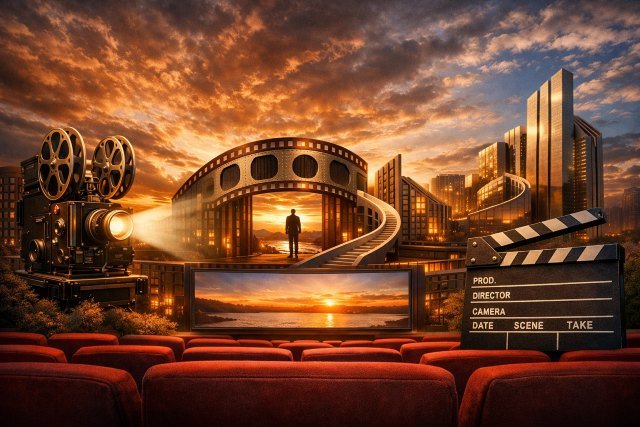
W0wkino is an intriguing term because it does not yet point to one universally recognized film company, technology standard, or official cinema movement. Instead, current web usage shows it appearing across unrelated sites, with some treating it as an emerging film concept and others associating it with unofficial streaming-style branding. That ambiguity makes W0wkino especially useful as a lens for discussing where digital cinema is headed next: toward more flexible production, platform-driven distribution, immersive storytelling, and audience-centered experiences.
In that sense, W0wkino can be explored as a symbol of a bigger industry shift. Digital cinema is no longer just about replacing film reels with digital projectors. It now includes streaming ecosystems, creator-led distribution, virtual production pipelines, AI-assisted workflows, short-form audience discovery, and new ways for filmmakers to build communities around stories. Deloitte’s 2025 Digital Media Trends notes that social platforms, creators, user-generated content, and advanced recommendation systems are reshaping the center of gravity in entertainment, which is exactly the environment a concept like W0wkino seems to sit inside.
What Is W0wkino in the Context of Digital Cinema?
W0wkino can be understood as a shorthand for a modern digital-cinema mindset. Rather than describing cinema only as a theatrical event, it points to cinema as an adaptive experience that can move across screens, formats, platforms, and communities. That includes theatrical releases, streaming premieres, mobile-first discovery, interactive fan engagement, and even creator-driven micro-distribution.
This matters because the audience relationship with film has changed. Viewers still value movies, but they also expect convenience, personalization, and accessibility. Entertainment now competes not only with other films, but also with short-form video, creator content, gaming, and recommendation-led discovery. Deloitte’s 2025 research highlights that this broader competition for attention is actively redefining how media companies and creators think about storytelling and distribution.
So when people talk about the future of digital cinema through a term like W0wkino, they are really talking about a hybrid future. It is a future where cinema keeps its emotional depth and visual ambition, but becomes more agile in how it is produced, shared, monetized, and experienced.
Why Digital Cinema Is Evolving So Quickly
The pace of change is not accidental. It is being driven by three major forces at once.
The first force is technological accessibility. High-quality cameras, cloud collaboration tools, LED-wall production environments, real-time rendering engines, and affordable post-production software have lowered the barrier to entry for ambitious visual storytelling. Independent creators can now produce cinematic work that once required studio-scale infrastructure.
The second force is audience behavior. People move fluidly between theaters, smart TVs, laptops, and phones. They discover films through clips, reviews, creator commentary, and social recommendations long before they watch the full piece. This shift has made discoverability almost as important as production quality. Deloitte’s findings on the growing influence of social platforms in entertainment reinforce this transformation.
The third force is the global expansion of screen culture. UNESCO has highlighted the scale and growth potential of audiovisual industries in emerging markets, noting that Africa’s film and audiovisual industries employ an estimated 5 million people and contribute about US$5 billion in GDP. That is a reminder that the future of cinema is not owned by one geography or one legacy system. Digital cinema is becoming more global, more distributed, and more culturally diverse.
W0wkino and the Shift From Distribution to Experience
A traditional film model focused heavily on distribution windows. The future model focuses more on experience design. W0wkino, viewed as a future-facing digital cinema idea, fits this perfectly.
In older systems, the biggest question was where a film would be released first. Today, creators and studios also ask how the film will live before release, during release, and after release. A story may begin with teaser clips on social platforms, continue through a theatrical or streaming debut, and then expand into behind-the-scenes content, community discussion, creator interviews, or extended universe storytelling.
This does not mean theaters are becoming irrelevant. In fact, movie exhibition groups have continued emphasizing that theaters remain a distinct and valuable part of the entertainment economy, even as digital habits expand. The more realistic view is not “theaters versus streaming,” but “premium communal experiences alongside digital flexibility.”
That blended model is one of the strongest reasons W0wkino works as a future-of-cinema concept. It reflects a screen culture where value comes from emotional immersion, convenience, community, and continuity across platforms.
The Core Features of the W0wkino Era
W0wkino and Platform-Native Storytelling
Digital cinema is increasingly shaped by the logic of platforms. Trailers are cut for vertical viewing. Scenes are designed to become conversation points. Visual identities must work as thumbnails, posters, clips, and stills. A modern cinematic project no longer lives in one final file; it lives in an ecosystem of media.
That reality changes how filmmakers think. Stories need strong hooks, memorable visual language, and emotional clarity that can travel across fragmented attention spans without losing depth. The best creators are not simplifying cinema. They are building layered entry points into it.
W0wkino and Immersive Visual Design
Another defining trait of the future is immersion. Audiences now expect richer visual worlds, more intentional sound design, and more seamless digital craft. Virtual production, real-time previs, and advanced compositing allow creators to build cinematic environments faster and with more control than many legacy workflows allowed.
This does not mean every project must look futuristic. It means creators can be more precise. A small drama can feel intimate and cinematic. A science-fiction film can scale visually without requiring impossible logistics. The digital toolset expands expressive possibility.
W0wkino and Creator Independence
One of the most exciting parts of digital cinema is how it empowers creator independence. A filmmaker with a defined style and a strong audience can now build momentum without relying entirely on traditional gatekeepers. That does not eliminate the role of studios, distributors, or festivals, but it does create alternate paths.
This is where W0wkino feels especially relevant. Several web references frame it as something connected to new film movements or experimental online film culture, even though the term itself remains inconsistently defined online. That inconsistency actually mirrors the current industry moment, where new cultural labels often emerge before institutions formalize them.
How W0wkino Reflects the Economics of Digital Cinema
Cinema is not only changing artistically. It is changing economically.
Modern screen businesses must balance subscription fatigue, advertising pressure, theatrical recovery, piracy risk, creator competition, and audience fragmentation. The Motion Picture Association has repeatedly emphasized the importance of legitimate online services and the protection of creative content across traditional and new distribution channels. That point matters because a healthy digital-cinema future depends on sustainable monetization, not just reach.
This is also why W0wkino should be discussed carefully. Some online references connect the name to unofficial streaming-style branding rather than a formal digital-cinema platform. That distinction matters for SEO writers, publishers, and readers. An article about W0wkino should avoid presenting it as an established official brand unless verified. Based on currently visible search results, it is more accurate to treat W0wkino as an emerging or loosely used internet term than as a clearly documented company.
For creators, the lesson is simple. The future of cinema belongs to models that combine artistic identity with legal, scalable distribution. Visibility without sustainability is fragile. Sustainable digital cinema needs rights protection, discoverability, community, and a monetization path that respects creators.
Real-World Scenario: What a W0wkino-Inspired Film Launch Could Look Like
Imagine an independent filmmaker releasing a visually striking sci-fi drama. In a traditional model, the strategy might depend almost entirely on festival buzz and a distribution deal. In a W0wkino-style digital cinema model, the release can be designed as a layered journey.
Months before launch, the filmmaker shares concept art, short production diaries, and cinematic teaser loops optimized for social discovery. During release, the film appears in selected theaters for prestige and community momentum while also securing a strategic streaming rollout. After release, the project grows through director Q&As, interactive world-building posts, scene breakdowns, and creator collaborations that keep the story alive.
This approach does not cheapen cinema. It extends its lifespan. It lets the story travel farther, reach niche audiences more effectively, and create deeper audience attachment.
Common Questions About W0wkino
Is W0wkino a real company or a digital cinema movement?
Right now, it appears to be an inconsistently used internet term rather than a clearly established official brand or recognized industry standard. Some sites describe it like a film movement, while others connect it to unofficial streaming-related branding. The safest editorial approach is to present W0wkino as an emerging concept or keyword, not a verified institution.
How is W0wkino connected to the future of digital cinema?
W0wkino is useful as a conceptual frame for discussing how cinema is evolving through streaming, creator-led discovery, immersive design, flexible distribution, and audience community building. It captures the idea that cinema is becoming more digital, adaptive, and platform-aware.
Does digital cinema mean the end of movie theaters?
No. Current industry discussion points toward coexistence, not replacement. Theaters remain important for premium communal viewing and cultural event status, while streaming and digital platforms provide flexibility and broader reach.
Why is discoverability so important now?
Because audiences no longer discover films in just one place. Social platforms, creators, recommendation engines, and online communities increasingly shape what people watch. That makes discoverability part of the cinematic strategy itself.
Actionable Tips for Writers, Marketers, and Filmmakers Covering W0wkino
If you are writing about W0wkino, define the term early and acknowledge its ambiguity. That builds trust and keeps the article from sounding speculative.
If you are marketing a film in the spirit of W0wkino, think beyond one release channel. Plan how the project will be discovered, discussed, clipped, shared, and revisited across platforms.
If you are a filmmaker, focus on world-building and audience relationship as much as on technical polish. In a fragmented media environment, the stories that travel best are not always the biggest. They are often the clearest in identity and the strongest in emotional connection.
If you are an SEO publisher, pair the keyword with related phrases like digital cinema future, immersive film technology, creator-led film distribution, streaming-era filmmaking, and platform-native storytelling. That gives the article topical depth and makes it more useful to readers who arrive with different search intent.
The Bigger Meaning of W0wkino
What makes W0wkino interesting is not that it is already fully defined. It is that it reflects the kind of language the internet creates when industries are in transition. The term sits at the intersection of cinema, digital identity, platform culture, and future-facing storytelling.
That is why W0wkino belongs in the conversation about where film is going next. The future of digital cinema will not be shaped by one format, one platform, or one business model. It will be shaped by creators and audiences building a more connected screen culture, where stories are cinematic, discoverable, immersive, and sustainable at the same time.
Conclusion
W0wkino is best understood as a flexible idea for exploring the future of digital cinema rather than as a fully verified standalone brand. It represents a world where film moves fluidly across theaters, streaming services, social platforms, and creator communities. In that world, success depends on more than production value. It depends on discoverability, emotional resonance, platform strategy, and sustainable distribution. As digital cinema continues to evolve, W0wkino stands out as a useful keyword for thinking about what comes next: more immersive experiences, more creator freedom, and a more adaptive relationship between stories and screens.