In today’s dynamic marketplace, local businesses need efficient ways to connect with customers and fuel growth. While digital marketing has become standard, innovative strategies like geofencing marketing are lifting local engagement to new heights.
Geo-fencing harnesses location data, enabling brands to engage nearby consumers when they’re most likely to take action. This powerful tool is redefining how small businesses attract foot traffic, boost sales, and outmaneuver local competitors.
When implemented with precision, geo-fencing can transform regional marketing by reaching the right audience at exactly the right moment. Businesses across retail, dining, and event sectors are seeing measurable benefits as they blend physical and digital strategies. With evolving technologies, now is the time for local businesses to explore how geo-fencing can become a core part of their growth tactics.
Whether using app-based notifications or SMS alerts, the versatility of geofencing allows businesses to meet consumers where they are, literally and figuratively, bridging the gap between online intent and offline action. It isn’t just about immediate sales; geo-fencing also supports brand building and retention by keeping customers connected to your business even after they leave your location.
What Is Geo-Fencing?
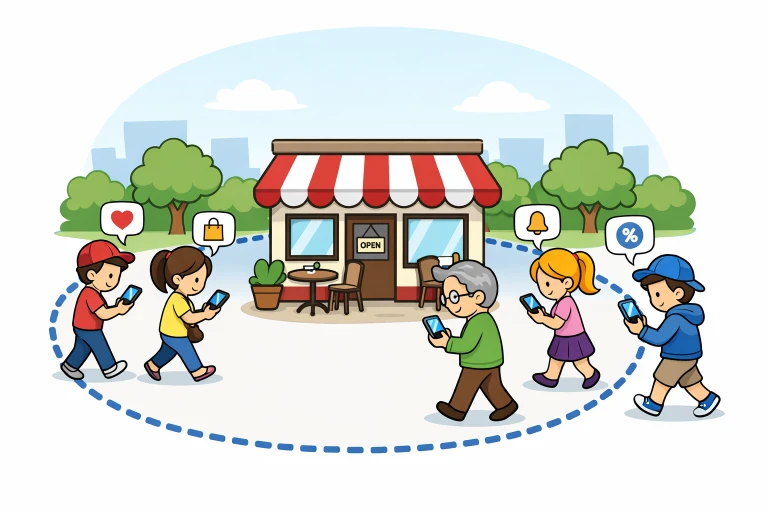
Geo-fencing is a location-based marketing technology that creates virtual boundaries around specific geographic zones. These boundaries are set using GPS or RFID technology and, when a mobile device enters or leaves the designated area, a customized action is triggered.
This may be a push notification, a promotional SMS, or a targeted display ad. Local businesses employ geo-fencing to reach nearby consumers with timely offers or information, making every interaction highly relevant to the consumer’s real-world context.
Geo-fencing can be implemented across various platforms and tools and allows significant customization, such as timing, messages, and creative elements tailored to the area and audience demographics. As mobile devices have become almost universally accessible, the opportunity for hyper-local targeting has reached unprecedented levels.
Benefits of Geo-Fencing for Local Businesses
Geo-fencing opens several powerful advantages for brick-and-mortar businesses:
- Increased Foot Traffic: Timely promotions engage users already near your location, driving new visits and impulse stops.
- Enhanced Customer Engagement: Location-relevant messaging delivers better response rates and deeper local loyalty.
- Competitive Advantage: By triggering offers near competitors’ locations, businesses can capture the interest of undecided shoppers.
- More Efficient Marketing Spend: Campaigns only target a defined local area, reducing ad waste and making budgets work smarter.
This technology is helping even mid-sized businesses level the marketing playing field against larger chains. Businesses using location-based marketing saw increased loyalty and improved user experience, underscoring geo-fencing’s growing popularity.
Geo-fencing also supports personalization; businesses can serve distinct offers to groups based on behavior, time of day, or even frequenting specific types of locations. It’s a modern extension of the kind of personal touch that local businesses have relied on for decades in building customer relationships within their communities.
Implementing Effective Geo-Fencing Strategies
For geo-fencing to reach its potential, local businesses must follow a strategic process:
- Set Clear Objectives: Establish your goals, whether it’s boosting sales, promoting an event, or building brand awareness in a specific neighborhood.
- Choose High-Traffic Locations: Geo-fences work best when covering zones with concentrated target audiences, such as busy intersections, festivals, or local competitors.
- Create Compelling Offers: Deliver actionable incentives, flash deals, exclusive discounts, or loyalty rewards to motivate in-the-moment conversion.
- Monitor and Refine: Use analytics tools to track campaign performance, targeting efficiency, and ROI, then optimize based on data insights.
Businesses should also consider integrating geo-fencing with other local marketing tactics. For example, by aligning geo-fenced offers with customer loyalty programs or event calendars, the impact can be multiplied. Gathering customer feedback after geo-fencing campaigns also helps refine future efforts, ensuring a continuous improvement cycle.
Case Studies: Successful Geo-Fencing Campaigns
- Retail: A national apparel chain saw a double-digit increase in foot traffic by delivering coupons to shoppers near its stores and competitors’ locations.
- Restaurants: A local cafe sent lunchtime deals to people within a half-mile radius, which boosted midday orders by 20 percent over two months.
- Events: An entertainment venue geo-fenced a local street fair and sent messages about their special event. Attendance at the venue’s post-fair party surged as a result.
Other businesses have used geo-fencing at sports arenas, concerts, or university campuses to build buzz and attract event-goers to nearby locations. By tapping into local happenings and community culture, marketers can provide relevant offers that enhance the overall customer experience.
Geo-fencing’s adaptability means it can work for both recurring campaigns and seasonal specials, making it a flexible tactic for all types of local enterprises.
Best Practices for Geo-Fencing
- Keep Boundaries Narrow: Smaller, well-planned geo-fences outperform broad, generic zones by maintaining relevance and higher conversion potential.
- Tailor Messaging: Use creative that references local landmarks, events, or community spirit to foster authenticity.
- Maintain Transparency: Share your data practices clearly so users understand and trust your use of location technology.
- Test and Iterate: Experiment with timing, offer type, and messaging, measuring results for ongoing improvement.
Ensuring messages are timely and non-intrusive is also key; bombarding users with notifications can turn a positive local experience into a negative one. Smart frequency caps and contextually aware campaigns keep interactions valued and welcome. Consider dayparting your offers, so messages arrive when recipients are most likely to act, such as during lunch hours for restaurants or after work for retail.
Challenges and Considerations
- Privacy Concerns: Build opt-in options and data accountability policies to address consumer sensitivities about tracking.
- Technology Gaps: Geo-fencing accuracy can be affected by smartphone capabilities and urban infrastructure.
- Resource Investment: Geo-fencing requires dedicated technology, campaign oversight, and staff training to maximize returns.
Furthermore, businesses should remain vigilant regarding evolving privacy regulations and ensure compliance with local and national data protection laws. The balance between personalization and privacy is delicate—businesses that handle it well will likely generate the most trust and long-term loyalty from their customer base.
Future Trends in Geo-Fencing
- Augmented Reality Integration: As AR becomes mainstream, combining it with geo-fencing will enable interactive, location-specific experiences for consumers.
- Advanced Data Analytics: Leveraging customer movement and purchase data will allow businesses to deeply personalize campaigns and forecast outcomes.
- Omnichannel Coordination: Geo-fencing will increasingly align with email, social, and search marketing for unified campaigns that drive real-world action.
Artificial intelligence and machine learning are also expected to power smarter targeting and offer generation, making geo-fencing campaigns more automatic and responsive to real-time conditions.
As wearable devices and connected vehicles enter the mainstream, they too may become part of geo-fencing strategies, expanding the ways businesses can reach potential customers on the move.
Conclusion
Geo-fencing is quickly reshaping local marketing opportunities, bridging digital and physical customer journeys for measurable results. By applying targeted strategies, following best practices, and staying alert to privacy needs and emerging trends, local businesses can put location at the center of their growth plans. Now is the time to explore how geo-fencing can shape lasting success for your business and your community.
With continuous advancements in technology, the possibilities for hyper-local engagement, improved customer service, and increased ROI are only set to expand. Businesses that leverage geo-fencing today will be well-positioned to lead their markets tomorrow.