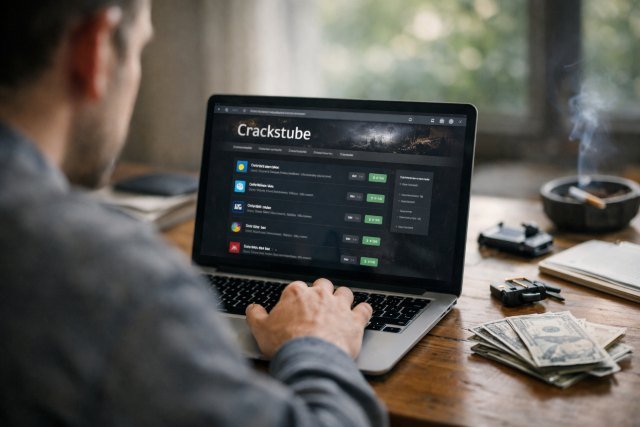
Crackstube is one of those internet terms that attracts curiosity fast, but clear information around it is surprisingly thin. Based on current search results, the name is used inconsistently online. Some pages describe it as a free streaming destination, others connect it to cracked software or unauthorized content, and a standalone site using the name appears to exist without the kind of transparent company information you would normally expect from a well-established platform. That lack of clarity matters because when a site gets attention before it earns trust, users often end up navigating a mix of hype, uncertainty, and security risk.
In practical terms, Crackstube seems best understood not as a fully verified mainstream brand, but as a label associated with unofficial online content access. That is exactly why people search for it. It promises convenience, speed, and free access, which are powerful drivers in an online world where users are tired of subscriptions, fragmented platforms, and endless account signups. At the same time, those same promises are often the reason unofficial sites become magnets for malicious ads, phishing traps, unsafe downloads, privacy abuse, and legal headaches.
This article takes a careful look at Crackstube from an SEO and reader-first perspective. Instead of treating every rumor as fact, it focuses on what can be said responsibly: why the name gets attention, what kinds of platforms it appears tied to, what risks users should understand before clicking, and what safer choices make more sense in the long run.
What Is Crackstube?
Crackstube appears to be a term commonly linked online with unofficial access to digital content, especially content that may bypass normal licensing, subscriptions, or payment systems. In some search results, it is associated with pirated media. In others, it is framed more broadly as a site category or content hub that trades on the appeal of “free access” and low friction. That inconsistency is itself a red flag. Trusted platforms usually have a clear business model, visible ownership, accessible policies, and stable brand messaging.
That does not automatically prove every page using the name is malicious. But it does mean users should avoid assuming that Crackstube is a verified, safe, or official service. When a platform identity is vague, users have less ability to verify who runs it, how content is sourced, how personal data is handled, and whether its links or downloads can be trusted. The gap between attention and accountability is often where the biggest online problems begin.
Why Crackstube Gets So Much Online Attention
The attention around Crackstube makes sense when you look at broader internet behavior. Users are constantly searching for faster and cheaper ways to access entertainment, tools, and digital content. Subscription fatigue is real. Many people are frustrated by rising costs, geo-restrictions, login walls, and the fact that content is scattered across multiple services. Unofficial platforms gain traction by presenting themselves as the simple shortcut.
That shortcut has a strong psychological pull. A site that appears to offer instant access without payment feels efficient, even when it is risky. Users may also discover names like Crackstube through social sharing, reposted links, low-quality blog posts, or search-engine curiosity. Once a term starts circulating, attention can snowball even if the platform behind it is not credible. In other words, online visibility does not equal legitimacy.
There is also a curiosity factor. Names that sound edgy, underground, or alternative often generate clicks because people want to know what they are missing. That can produce search volume even when the platform itself is poorly documented. In SEO terms, Crackstube is the kind of keyword that can trend because it sits at the intersection of curiosity, convenience, and controversy.
Crackstube and the Problem of Platform Trust
One of the biggest issues with Crackstube is not just what it may host, but how difficult it is to verify it using standard trust signals. Reliable platforms normally offer clear contact information, terms of service, privacy policies, ownership details, help documentation, and recognizable security practices. When those signals are weak, vague, or missing, the user takes on more of the risk.
This is where many readers make a common mistake. They judge trust by surface design. A slick interface, attractive thumbnails, or a simple search bar can make a site feel modern and safe. But trust is not about appearance. It is about transparency, accountability, and technical safety. A polished unofficial site can still expose users to harmful redirects, fake alerts, credential theft, or risky downloads.
That is why cybersecurity advice consistently focuses on behavior and verification rather than looks alone. Scam websites often rely on urgency, curiosity, or convenience to get the first click. Once the user is inside that funnel, deceptive prompts can do the rest.
Crackstube Risks Users Should Understand
When people ask whether Crackstube is “safe,” the honest answer is that the risk profile appears similar to other unofficial or hard-to-verify content sites. Even if a user visits out of curiosity and does not download anything, they can still be exposed to aggressive advertising, tracking, scam prompts, and suspicious redirects. Google Safe Browsing exists precisely because unsafe sites can harm users through browsing and downloads, not just through obvious malware installers. Google says its Safe Browsing protections help protect more than five billion devices every day by warning users about dangerous sites and files.
The first major concern is malware. The FTC has warned that illegal video streaming apps and related services can spread malware, and cybersecurity researchers have long documented that fake “free” or “cracked” access ecosystems are commonly used to distribute harmful software. The danger is not always a dramatic virus pop-up. It can be a hidden downloader, browser hijacker, adware bundle, or credential-stealing tool that runs quietly in the background.
The second concern is phishing. The UK’s National Cyber Security Centre explains that scam websites may download viruses or try to steal passwords and personal information. Unofficial content sites are especially risky because they often train users to click through confusing prompts, fake play buttons, verification pages, or urgent warnings. That environment makes it easier for attackers to disguise malicious links as normal site actions.
The third concern is privacy. A site does not need to install malware to be harmful. It may gather browsing data, device details, behavioral signals, and referral patterns in ways users do not fully understand. On an official platform, users at least have a fair chance to review privacy controls and company policies. On a murky platform, that visibility can disappear. Even when the immediate outcome is not catastrophic, the user can still be profiled, tracked, and funneled into a low-trust ad ecosystem.
The fourth concern is legal exposure. Europol has repeatedly treated digital piracy as a serious enforcement area, including operations targeting piracy services and broader criminal infrastructure around them. That does not mean every visitor will face legal action, but it does show that unauthorized content ecosystems are not harmless gray zones. They often overlap with fraud, illicit monetization, and organized criminal behavior.
Is Crackstube Legal?
Legality depends on what the platform actually offers, where it operates, and how content is sourced. But if Crackstube is being used to describe a site offering unauthorized access to copyrighted media or cracked software, that raises obvious legal concerns. Copyright law and enforcement differ by country, yet the general principle is straightforward: a platform distributing or facilitating access to protected content without authorization faces serious legal risk. Europol’s anti-piracy actions underline that regulators and enforcement bodies take this space seriously.
For readers, the more useful question is not “Can I technically open the website?” but “What am I participating in if I use it?” If the platform depends on unlicensed distribution, hidden monetization, or deceptive download behavior, then the user is stepping into an ecosystem that is unstable at best and harmful at worst.
Why “Free Access” Often Costs More Than It Looks
This is the part many users overlook. Free access online is rarely free in a meaningful sense. If a platform is not charging money, it may be charging with attention, data, exposure to advertising, or risky downloads. In some cases, the business model is built around getting users to click deceptive placements, accept browser permissions, disable security protections, or install something they did not intend to install.
That tradeoff is why unofficial platforms often age badly. Even if a user has one smooth visit, that does not make the platform trustworthy. Low-trust sites can change ownership, rotate domains, swap ad networks, or introduce more aggressive behavior over time. Today’s harmless-looking clone can become tomorrow’s phishing trap.
A useful real-world way to think about Crackstube is this: it may attract visitors with convenience, but convenience without accountability is a poor long-term bargain.
How to Evaluate a Site Like Crackstube Before Clicking Further
A practical safety mindset matters more than guessing the site’s intent. Start with transparency. Can you clearly identify who runs the platform? Is there a genuine company presence, not just a generic disclaimer or contact email? Does the privacy policy look specific and credible? Are there clear terms of service? If those basics are missing, caution is justified.
Next, pay attention to browser behavior. Security warnings, unexpected redirects, fake update prompts, repeated pop-ups, or pressure to install extensions are all warning signs. Google Safe Browsing warnings should never be ignored. Neither should messages urging you to disable antivirus or “verify” yourself through suspicious downloads.
Then consider content legitimacy. If a platform appears to offer premium or copyrighted material with no visible licensing explanation, that alone should change how much trust you place in it. The more unbelievable the offer, the more cautious the user should be.
Safer Alternatives to Crackstube
For most readers, the smarter path is not to find a “safer way” to use Crackstube, but to step back and choose safer categories of access instead. Official streaming services, ad-supported legal platforms, free trials from reputable brands, open-source software repositories, and creator-approved distribution channels may not feel as frictionless in the moment, but they are far easier to verify and far less likely to expose you to fraud or malware.
This matters even more for families, shared devices, and work networks. One bad click on an unofficial site can affect more than one user. If a device stores email sessions, payment details, or business credentials, the cost of risky browsing rises quickly.
Common Questions About Crackstube
A common question is whether Crackstube is a real platform or just an internet term. Based on current search visibility, it appears to function as both a site name and a loosely used label online, but it does not show the kind of authoritative public footprint that would make it easy to verify as a mainstream trusted service.
Another common question is whether Crackstube is safe. The better answer is that unofficial, hard-to-verify content platforms come with elevated security, privacy, and legal risk. The FTC, Google, and national cyber agencies all provide guidance that supports a cautious approach to suspicious content sites, scam websites, and dangerous downloads.
People also ask why sites like Crackstube become popular so quickly. The answer is simple: they tap into demand for cheap, fast, low-friction access. But popularity built on uncertainty is not the same as trust.
Final Thoughts on Crackstube
Crackstube is a useful example of how online attention can outpace online credibility. The name draws clicks because it suggests easy access, novelty, and convenience. But when you look closer, the bigger story is not just the platform itself. It is the pattern it represents: unclear ownership, questionable content sourcing, and a risk environment shaped by malware, phishing, privacy exposure, and possible copyright issues.